At first glance, getting rid of leftover paint seems easy — just toss the can in the trash and move on. But paint disposal isn’t that simple. Depending on the type, paint can be considered hazardous waste, and throwing it away the wrong way can cause environmental damage or even violate local regulations.
Liquid paint, especially oil-based varieties, contains chemicals that shouldn’t end up in landfills, storm drains, or regular garbage bins. When disposed of improperly, paint can contaminate soil and water, harm wildlife, and create health risks for sanitation workers. Even pouring paint down the drain can clog plumbing and pollute waterways.
The good news is that there are safe, legal, and eco-friendly ways to dispose of paint. From drying out latex paint before throwing it away to taking oil-based paint to a household hazardous waste facility, you have several responsible options. In this guide, we’ll walk you through exactly how to dispose of paint properly — so you can clean up your space without harming the environment.
Can You Throw Paint in the Trash?
Short Answer: It Depends on the Type
The most common question people ask is: Can you throw paint in the trash?
The answer isn’t a simple yes or no. It depends on whether the paint is latex (water-based) or oil-based, and whether it’s still liquid.
Most local waste programs do not allow liquid paint in regular trash. However, fully dried latex paint is often acceptable in many areas. Oil-based paint is a different story and usually requires special disposal.
Latex vs. Oil-Based Paint: What’s the Difference?
Understanding the type of paint you have is the first step.
Latex (Water-Based) Paint:
- Easier to clean up with water
- Generally less toxic
- Often allowed in trash once completely dried
Oil-Based Paint:
- Contains solvents and chemicals
- Classified as hazardous waste in many states
- Must be taken to a hazardous waste facility
If you’re unsure, check the label. Words like “oil-based,” “alkyd,” or “contains solvents” usually mean it requires special handling.
Why Liquid Paint Is Usually Not Allowed
Liquid paint can spill inside garbage trucks, leak into landfills, and contaminate soil or groundwater. It also creates messy cleanup problems for waste facilities.
That’s why most municipalities prohibit throwing away:
- Open cans of liquid paint
- Partially full oil-based paint
- Paint mixed with solvents or thinners
Even latex paint cannot go in the trash while it’s still wet.
When Dried Paint May Be Acceptable
In many areas, completely dried latex paint can be placed in regular trash. The key word here is completely. The paint should be solid, not sticky or pourable.
To safely dispose of latex paint:
- Leave the lid off and let it air dry
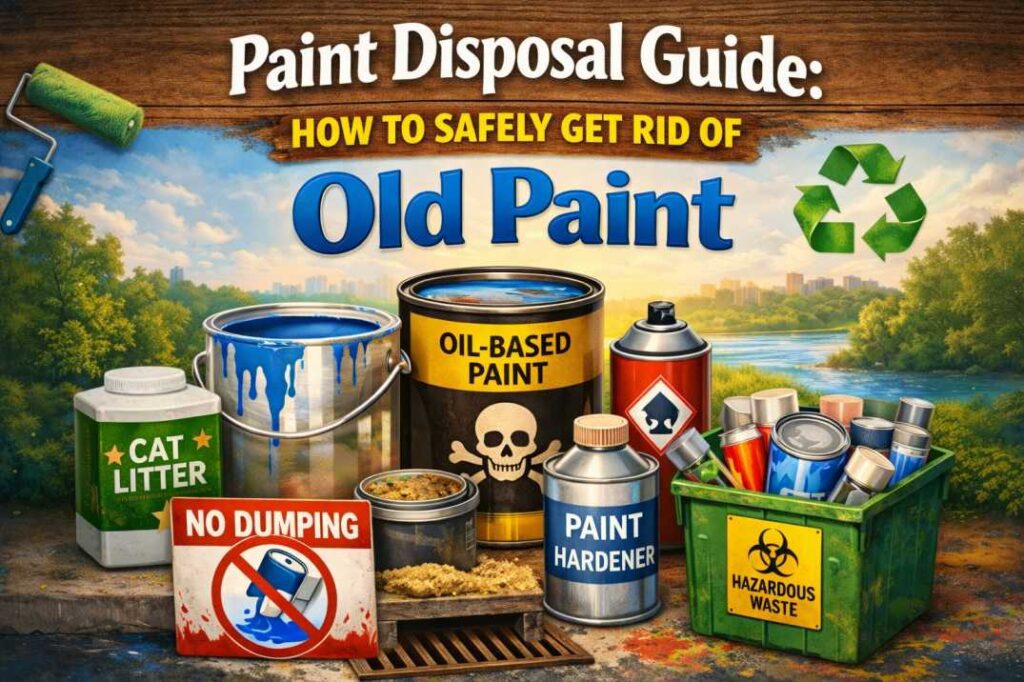
- Add kitty litter, sawdust, or a paint hardener
- Ensure the contents are fully solid before tossing
Always double-check your local waste rules before disposal.
You can throw away fully dried latex paint in most areas, but liquid paint and oil-based paint must be taken to a hazardous waste facility. Always check local regulations before disposal.
Is Paint Considered Hazardous Waste?
The answer depends on the type of paint you’re dealing with. Some paints are legally classified as hazardous waste, while others fall into a gray area depending on your state or local regulations. Knowing the difference helps you avoid fines — and protects the environment.
Oil-Based Paint = Hazardous Waste
Oil-based paint is almost always considered household hazardous waste (HHW). It contains solvents and chemicals that can be harmful if poured into drains, dumped in landfills, or thrown in regular trash.
Because of these chemicals, oil-based paint:
- Can contaminate soil and groundwater
- Produces strong fumes
- Is flammable in some cases
- Must be taken to a hazardous waste facility
You should never dry out oil-based paint and throw it away like latex paint. It requires proper handling.
Latex Paint Rules Vary by State
Latex (water-based) paint is generally less toxic, but disposal rules still vary. Some states no longer consider latex paint hazardous once it’s dried. Others may still require specific disposal procedures.
In many areas:
- Wet latex paint is not allowed in trash
- Fully dried latex paint may be accepted
- Some recycling programs collect leftover latex paint
Always check your local guidelines before assuming it’s safe to toss.
Why Paint Thinner and Solvents Are Hazardous
Paint thinner, mineral spirits, and other solvents are classified as hazardous waste almost everywhere. These liquids are flammable and can release harmful vapors.
Improper disposal of thinners can:
- Damage plumbing systems
- Pollute waterways
- Create fire hazards
- Lead to legal penalties
These materials must be taken to an approved hazardous waste drop-off center.
Local Regulations Matter
Paint disposal rules aren’t the same everywhere. Your city or county may have:
- Household hazardous waste collection events
- Designated drop-off sites
- Restrictions on curbside disposal
- Fines for illegal dumping
A quick visit to your local waste management website can clarify exactly what’s allowed in your area.
Understanding whether your paint is hazardous helps you choose the safest disposal method. When in doubt, treat it as hazardous and use an approved facility — it’s always better to be cautious than risk environmental damage.
Types of Paint and How to Dispose of Each
Not all paint should be handled the same way. The safest disposal method depends on whether it’s latex, oil-based, or spray paint. Knowing the difference prevents environmental harm and keeps you compliant with local regulations.
A. Latex (Water-Based) Paint
Latex paint is the easiest type to dispose of — but only once it’s completely dry. You should never throw away liquid latex paint. Instead, let it harden first.
Here’s how to dry it safely:
- Leave the lid off in a well-ventilated area
- Mix in kitty litter, sawdust, or commercial paint hardener
- Stir until the paint thickens and becomes solid
Once the paint is fully hardened and no longer sticky, most municipalities allow you to place the open can in regular trash. Always double-check local rules before disposal.
B. Oil-Based Paint
Oil-based paint is treated differently because it contains chemicals and solvents. It is typically classified as household hazardous waste and cannot go in the trash — even if dried.
Important rules to remember:
- Never pour oil-based paint down a drain
- Do not try to dry it out for regular trash disposal
- Take it to an approved hazardous waste facility
Most cities offer designated drop-off centers or scheduled collection events for hazardous materials. This ensures safe processing and prevents environmental contamination.
C. Spray Paint Cans
Spray paint cans require special attention because they’re pressurized. Whether they can go in the trash depends on whether they’re empty.
If the can is completely empty:
- It may be accepted in regular trash
- Some recycling programs may accept it as scrap metal
If the can still contains paint:
- It is considered hazardous waste
- It must be taken to a hazardous waste facility
Never puncture or burn spray paint cans. Pressurized containers can explode or release harmful fumes.
Disposing of paint properly starts with identifying the type you have. When in doubt, contact your local waste authority — it’s always better to confirm than risk fines or environmental damage.
How to Dry Out Paint Before Disposal
If you’re wondering how to harden paint for disposal, you’re not alone. Most cities allow dried latex paint in the trash — but it must be completely solid first. The goal is simple: turn liquid paint into a dry, non-pourable material that won’t leak in the garbage truck or landfill.
Here’s how to do it safely and effectively.
Step 1: Leave the Lid Off in a Ventilated Area
Start by removing the lid and placing the paint can in a well-ventilated space, like a garage with the door open. This allows moisture to evaporate naturally.
Important tips:
- Keep it away from rain or moisture
- Store it out of reach of pets and children
- Avoid enclosed indoor spaces with poor airflow
Small amounts of paint may dry on their own within a few days.
Step 2: Add Absorbent Materials
If you want to speed things up, mix in absorbent materials. This is the most common and reliable method.
You can use:
- Kitty litter (clay-based works best)
- Sawdust
- Shredded newspaper
- Dirt or sand
Stir thoroughly until the paint thickens. The mixture should no longer flow or splash.
Step 3: Use Commercial Paint Hardeners
For faster results, consider using a store-bought paint hardener. These are inexpensive and designed specifically for disposal purposes.
To use:
- Pour the hardener into the paint
- Stir as directed on the packaging
- Wait for the paint to solidify
Most hardeners work within 30 minutes to a few hours, depending on the volume.
How Long Does It Take to Dry?
Drying time depends on:
- The amount of paint left
- Air circulation
- Temperature
- Whether you used absorbent material
A nearly empty can may dry in a day or two. A half-full can may take several days without additives. Using kitty litter or hardener significantly reduces drying time.
How to Know When It’s Safe to Throw Away
Paint is ready for disposal when:
- It is completely solid
- It cannot be stirred or poured
- The surface is firm and not sticky
Once hardened, you can typically place the open can in regular trash. Some areas require removing the lid — check local guidelines first.
Drying paint properly protects sanitation workers and prevents environmental damage. It’s a simple step that makes disposal safe, legal, and hassle-free.
Where to Take Leftover Paint
If you’re not sure where to take leftover paint, you’re not alone. Many people search for “paint disposal near me” because rules vary by city and state. The safest option is usually a Household Hazardous Waste (HHW) facility, especially for oil-based paint, solvents, and partially full cans.
Household Hazardous Waste (HHW) Facilities
HHW centers are designed to safely handle materials like oil-based paint, stains, and paint thinners. These facilities:
- Accept hazardous liquids that can’t go in regular trash
- Ensure proper processing and environmental protection
- Often operate on scheduled drop-off days
Most counties list HHW locations on their waste management websites.
Local Recycling Centers & Community Programs
Some recycling centers accept leftover latex paint for reprocessing. In certain areas, community paint recycling programs collect usable paint and remanufacture it into new products. This reduces landfill waste and supports eco-friendly reuse.
You may also find:
- Seasonal paint collection events
- State-run paint stewardship programs
- Community reuse exchanges
These programs are especially helpful if the paint is still in good condition.
Retailer Recycling Programs
In some regions, home improvement stores offer paint recycling or take-back programs. Availability varies by state and local regulations, so it’s best to call ahead before bringing your cans.
Certain paint brands also participate in manufacturer-backed recycling initiatives, which are often listed on their websites.
Use Online Directories to Find Locations
If you’re unsure where to start, online tools make it easy:
- Earth911.com helps you search for paint recycling centers by ZIP code
- Your city or county waste management website lists approved facilities
- Some states maintain official paint stewardship directories
Taking a few minutes to check these resources ensures your leftover paint is handled safely and legally.
Disposing of paint responsibly protects the environment and keeps you compliant with local rules. When in doubt, choose a certified facility over the regular trash.
Can You Pour Paint Down the Drain?
Short answer: No, you should never pour paint down the drain. Whether it’s latex or oil-based, paint can cause serious plumbing problems and environmental damage. It may seem like a quick solution, but it often leads to bigger and more expensive issues.
Why It Damages Plumbing
Paint doesn’t behave like water. Even latex paint can thicken and stick inside pipes. Over time, this buildup can clog plumbing systems and lead to costly repairs.
Pouring paint down sinks, toilets, or outdoor drains can:
- Harden inside pipes
- Block sewage lines
- Damage septic systems
- Create long-term maintenance problems
Once paint dries inside plumbing, it’s difficult and expensive to remove.
Environmental Contamination Risks
Paint poured down the drain eventually enters wastewater systems. While treatment facilities can filter some contaminants, they are not designed to handle large amounts of paint chemicals.
Improper disposal can:
- Pollute rivers and lakes
- Harm aquatic life
- Contaminate soil and groundwater
- Release toxins into ecosystems
Oil-based paints and solvents are especially harmful because they contain chemicals that do not break down easily.
Legal Penalties in Some Areas
In many regions, dumping paint into drains or storm sewers is illegal. Environmental regulations are strict because of the long-term impact on water quality.
Violations can result in:
- Fines
- Environmental penalties
- Local code enforcement action
Even if it seems minor, improper disposal can carry serious consequences.
Proper Alternatives
Instead of pouring paint down the drain, choose a safer option:
- Dry out latex paint before throwing it away
- Take oil-based paint to a hazardous waste facility
- Participate in local paint recycling programs
- Donate usable paint to community organizations
Choosing the right disposal method protects your plumbing, the environment, and your wallet. When in doubt, always check your local waste management guidelines before disposing of paint.
What Happens to Recycled Paint?
Many people assume recycled paint just gets thrown away somewhere else. That’s not true. When handled properly, leftover paint can be processed, cleaned, and even turned into brand-new products. Recycling paint reduces waste and gives usable materials a second life.
Oil-Based Paint Processing
Oil-based paint is treated as hazardous waste, so it goes through a careful handling process. At a licensed facility, professionals separate the liquid from contaminants and recover usable solvents.
The process typically includes:
- Safe containment and chemical treatment
- Filtering out impurities
- Recovering reusable components
- Proper disposal of hazardous residues
This keeps toxic chemicals out of landfills and waterways.
Latex Paint Remanufacturing
Latex paint is often easier to recycle. After collection, it’s screened and filtered to remove debris like dried chunks or foreign materials.
Next steps may include:
- Adjusting color and consistency
- Adding preservatives or stabilizers
- Quality testing for performance
Once processed, it becomes usable paint again.
Reblending into New Paint
One of the most common outcomes is reblending. Recycled latex paint is mixed together to create neutral colors, often sold as gray or beige under recycled paint brands.
This reblended paint is commonly used for:
- Community projects
- Construction jobs
- Primer or base coats
- Large-scale painting needs
It’s a cost-effective and environmentally responsible option.
Environmental Benefits
Recycling paint provides real environmental advantages:
- Reduces landfill waste
- Prevents chemical contamination
- Conserves raw materials
- Lowers energy use compared to producing new paint
Choosing paint recycling over disposal helps reduce pollution and supports a circular economy. Instead of becoming waste, your leftover paint becomes a resource.
Eco-Friendly Paint Disposal Tips
The most eco-friendly paint disposal method starts before you even open the can. Reducing waste in the first place is always better than figuring out how to get rid of leftovers later. A few simple habits can make a big environmental difference.
Buy Only What You Need
Overbuying paint is one of the biggest reasons people end up with half-full cans sitting in garages for years. Before starting a project, measure your space carefully and use an online paint calculator to estimate coverage.
Smart buying helps:
- Reduce leftover waste
- Save money
- Prevent unnecessary disposal later
If you’re unsure, ask a paint store associate for guidance rather than guessing.
Store Paint Properly for Reuse
If you have leftover paint, store it correctly so it stays usable for touch-ups. Seal the lid tightly and store the can in a cool, dry place away from extreme temperatures.
To extend shelf life:
- Wipe paint from the rim before sealing
- Store cans upside down to reduce air exposure
- Label the can with the room or project name
Proper storage can keep latex paint usable for several years.
Donate Usable Paint
If the paint is still in good condition, donation is a great option. Many community groups, schools, theaters, and non-profits accept unopened or lightly used paint for projects.
Before donating:
- Make sure the paint isn’t expired
- Confirm it hasn’t separated or spoiled
- Check the organization’s acceptance guidelines
Donating keeps usable paint out of landfills and supports local projects.
Participate in Community Reuse Programs
Some cities run paint recycling or reuse programs where residents can drop off leftover paint for others to use. These programs help circulate paint within the community rather than discarding it.
Community reuse programs:
- Reduce landfill waste
- Lower environmental impact
- Provide affordable paint for residents
Choosing eco-friendly disposal methods protects natural resources and supports sustainable practices. Small actions add up when everyone participates responsibly.
Common Mistakes to Avoid
Paint disposal seems simple, but small mistakes can cause serious environmental damage and even legal trouble. Avoiding these common errors keeps your home, community, and local waterways safe.
Pouring Paint Into Sinks or Storm Drains
One of the worst things you can do is pour leftover paint down a sink, toilet, or outdoor drain. Even latex paint can clog pipes and contaminate water systems.
Storm drains often lead directly to rivers and lakes — without treatment. That means chemicals can enter natural water sources quickly. Always choose drying or hazardous waste drop-off instead.
Throwing Liquid Paint in the Trash
Many people assume trash is fine for any household item. That’s not true for liquid paint. Wet paint can leak inside garbage trucks and landfills, creating cleanup hazards.
Liquid latex paint must be dried first. Oil-based paint should go to a hazardous waste facility. If it’s still pourable, it’s not ready for the trash.
Leaving Paint Cans Open Outdoors
Leaving paint cans outside to dry without supervision can create problems. Rain can wash paint into soil. Animals or children may access it. Wind can spread debris.
If you’re drying latex paint:
- Keep it in a protected, ventilated area
- Store it away from pets and kids
- Avoid exposure to rain or moisture
Proper drying prevents accidental contamination.
Mixing Hazardous and Non-Hazardous Waste
Never combine oil-based paint, solvents, or chemicals with regular household trash. Mixing hazardous and non-hazardous materials can lead to unsafe chemical reactions.
Keep materials separated:
- Latex paint (dry before disposal)
- Oil-based paint (hazardous waste)
- Paint thinner and solvents (hazardous waste)
Following proper guidelines keeps sanitation workers safe and prevents environmental harm.
Avoiding these mistakes ensures your paint disposal is safe, legal, and environmentally responsible. A little extra care goes a long way.
FAQs About Paint Disposal
Can I throw paint in the trash?
It depends on the type and condition of the paint. Fully dried latex paint is usually allowed in regular trash in many areas. However, liquid paint and oil-based paint should not go in the trash. Always check your local waste guidelines before disposal.
Is dried paint safe to dispose of?
Yes, in most cases, completely dried latex paint is safe to throw away. The key is that it must be fully solid — not sticky, soft, or pourable. If the paint is still wet or partially liquid, it needs more time to dry or must be taken to a hazardous waste facility.
How do I dispose of oil-based paint?
Oil-based paint is typically classified as household hazardous waste. It should be taken to a designated hazardous waste collection site. Never pour it down the drain, and don’t attempt to dry it out for regular trash disposal.
Does Home Depot recycle paint?
Home Depot does not usually accept paint for recycling at standard store locations. However, some regions have retailer-supported recycling programs or community paint collection events. It’s best to call your local store or check municipal recycling programs for options.
Where can I take old paint near me?
You can usually take old paint to:
- Household hazardous waste (HHW) facilities
- Local recycling centers
- Community paint recycling programs
- Municipal waste collection events
Search your city or county’s waste management website to find approved drop-off locations.
How do I dispose of spray paint cans?
If a spray paint can is completely empty, many areas allow it in regular trash or metal recycling. If it still contains paint, it must be taken to a hazardous waste facility. Never puncture, crush, or burn spray paint cans because they are pressurized and can explode.
Disposing of paint properly protects your plumbing, the environment, and your community. When in doubt, treat paint as hazardous and confirm disposal rules with your local waste authority.