
When your microwave stops working, it’s tempting to drag it to the curb and forget about it. But microwaves aren’t regular trash. They’re considered electronic waste (e-waste), which means they contain wiring, metal components, and electrical parts that shouldn’t just end up in a landfill.
Throwing a microwave in the trash can create environmental and safety issues. Inside the unit are electrical capacitors, circuit boards, and metal parts that can be harmful if crushed or dumped improperly. Landfills aren’t designed to safely process these materials, and in some areas, disposing of electronics in regular garbage is actually restricted.
You have better options. From local e-waste recycling centers and retailer take-back programs to junk removal services and donation opportunities, there are safe and responsible ways to get rid of your old microwave.
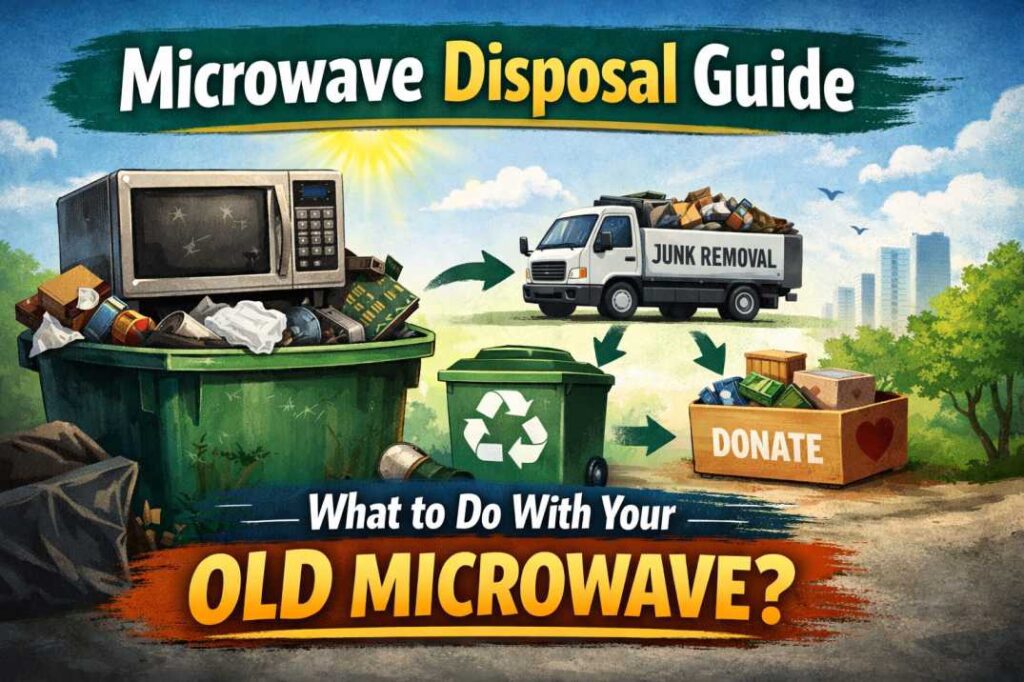
Can You Throw a Microwave in the Trash?
It’s one of the most common questions people ask: Can I just throw my old microwave in the trash? The short answer is — usually, no. In many areas, microwaves are classified as electronic waste (e-waste), which means they require special handling and disposal.
Are Microwaves Considered E-Waste?
Yes, most microwaves fall under the category of e-waste because they contain electrical wiring, circuit boards, and internal components. Even though they look like simple kitchen appliances, they’re built with materials that shouldn’t go into a regular landfill.
Microwaves often include:
- Metal parts that can be recycled
- Electrical components that require proper handling
- Capacitors that may still hold a charge
Because of these parts, they’re treated differently from everyday household garbage.
Local Regulations and Restrictions
Many cities and states have strict rules against throwing electronics in the regular trash. Some areas impose fines for improper disposal, while others require residents to use designated recycling centers or scheduled bulk pickup services.
Before tossing a microwave in the dumpster, check your:
- Local waste management website
- Municipal recycling guidelines
- County hazardous waste program
It takes just a few minutes — and it can save you from penalties.
Why Improper Disposal Is Harmful
When microwaves are dumped in landfills, they can:
- Contribute to electronic waste pollution
- Waste valuable recyclable metals
- Potentially release harmful substances over time
Plus, improper disposal puts sanitation workers at risk if internal components break open during collection.
When Trash Disposal Might Be Allowed
In rare cases, some municipalities may allow microwaves in regular trash — usually if they’re placed out during special bulk waste pickup days or if local guidelines permit small appliances in standard garbage bins.
However, even if it’s technically allowed, recycling is almost always the better option for both safety and environmental reasons.
Why Microwaves Require Special Disposal
At first glance, a microwave just looks like a bulky kitchen appliance. But inside, it’s packed with electrical parts, wiring, and recyclable metals that make regular trash disposal a bad idea. That’s why microwaves fall into the category of e-waste and need special handling.
Electrical Components and Wiring
Every microwave contains internal wiring, circuit boards, and electronic components that control heating and timing functions. These parts aren’t designed to be crushed in garbage trucks or buried in landfills.
More importantly, some microwaves contain capacitors that can still hold an electrical charge, even after being unplugged. That’s a safety risk if the unit is broken open or dismantled improperly.
Metal Parts and Recyclable Materials
Microwaves are full of materials that can actually be reused. Instead of wasting them in a landfill, recycling allows these parts to get a second life.
Recyclable components often include:
- Steel outer casing
- Copper wiring
- Aluminum parts
- Metal racks and internal hardware
When recycled properly, these materials can be repurposed into new appliances, construction materials, or other metal products.
Environmental Impact of Landfill Disposal
When a microwave ends up in a landfill, it takes up valuable space and contributes to the growing problem of electronic waste. Over time, certain components can break down and release harmful substances into the soil.
Recycling helps reduce:
- E-waste pollution
- Raw material mining
- Energy consumption from producing new metals
Choosing responsible disposal isn’t just about following rules — it’s about protecting the environment.
Safety Risks and Hazardous Materials
Beyond environmental concerns, microwaves can pose safety risks if handled carelessly. Sharp metal edges, fragile glass trays, and internal electrical components can cause injuries during disposal.
Improper dismantling can also expose:
- Capacitors
- Insulation materials
- Electrical boards
That’s why professional recycling centers are equipped to handle these items safely and responsibly.
In short, microwaves aren’t ordinary trash. Because of their electrical systems and recyclable metals, they deserve careful, eco-friendly disposal — not a trip to the landfill.
What to Do Before Disposing of a Microwave
Before you haul your microwave to a recycling center or schedule pickup, take a few minutes to prepare it properly. A little prep makes disposal safer, easier, and sometimes even free — especially if the unit still works and can be donated.
Unplug and Clean the Unit
Start by unplugging the microwave completely and letting it sit for a while. Even though it’s no longer in use, you want to make sure it’s fully powered down before moving it.
Next, give it a quick but thorough cleaning. Wipe down the inside and outside to remove grease, crumbs, and spills. A clean appliance is:
- Safer to handle
- More likely to be accepted for donation
- Easier for recycling centers to process
Remove the Glass Plate and Accessories
Take out the glass turntable, plastic ring, and any removable racks. These parts can break during transport and cause injury.
- The glass plate may be recyclable depending on local guidelines.
- Plastic components usually go in regular trash unless your recycling program accepts them.
Separating these pieces keeps the microwave lighter and reduces the risk of damage while moving it.
Check If It Still Works
Before deciding to recycle, plug it in briefly and test it (if safe to do so). If it heats properly and the buttons function, you might have the option to donate it instead of disposing of it.
Many organizations accept working microwaves, including:
- Local shelters
- Community centers
- Nonprofit donation programs
If it’s functional, you could help someone in need and keep it out of the landfill.
Remove Personal Debris and Food Residue
It sounds simple, but don’t skip this step. Remove any leftover packaging, grease buildup, or forgotten food inside. Recycling centers and donation sites may reject dirty appliances.
A quick wipe-down ensures:
- No odors
- No pest attraction
- A smoother acceptance process
Taking these simple steps ensures your microwave is ready for responsible disposal. It protects sanitation workers, increases the chance of reuse, and keeps the process stress-free.
Microwave Disposal Options
Once your microwave is unplugged and cleaned, you have several safe ways to get rid of it. The best option depends on whether it still works, your local regulations, and how much convenience you want. Here’s a breakdown of the most practical and eco-friendly choices.
A. Recycle Your Microwave
Recycling is usually the smartest option. Microwaves contain recyclable metals, wiring, and electronic components that shouldn’t end up in a landfill.
🔹 Local E-Waste Recycling Centers
Most cities have designated electronic waste (e-waste) recycling centers that accept small appliances like microwaves. These facilities are equipped to safely dismantle and recycle internal components.
🔹 Appliance Recycling Programs
Some municipal waste departments offer appliance recycling programs specifically for kitchen items. Check your city’s website for drop-off locations or scheduled collection events.
🔹 Retailer Take-Back Programs
Many large retailers offer recycling programs, including:
- Best Buy (in-store electronics recycling)
- Staples (small electronics drop-off)
Some stores may charge a small fee, but it’s often minimal — and worth it for responsible disposal.
🔹 Scrap Metal Recycling
Because microwaves contain steel and other metals, some scrap metal yards may accept them. You won’t make much money, but it’s another way to keep materials out of landfills.
B. Junk Removal Services
If you don’t want to transport the microwave yourself, a junk removal company can handle everything.
🔹 When to Hire Professionals
- You’re removing multiple appliances
- You’re cleaning out a home or office
- You don’t have transportation
- The microwave is built-in or difficult to remove
🔹 Cost Expectations
For a single microwave, expect pricing based on minimum load charges, typically depending on location and company policies.
🔹 Eco-Friendly Benefits
Many junk removal companies sort items after pickup and send recyclables to proper facilities. Choosing a company that prioritizes recycling ensures your microwave is handled responsibly.
C. Curbside Bulk Pickup
Some municipalities allow microwaves to be placed out during bulk item pickup days.
🔹 When It’s Allowed
- Scheduled bulky waste collection days
- Pre-approved appliance pickup requests
Always confirm with your local waste department before leaving it at the curb. Some cities require advance scheduling or tagging.
D. Donate a Working Microwave
If your microwave still heats food properly, donation may be the best option.
🔹 Who Accepts Used Microwaves
- Community shelters
- Local nonprofits
- Churches
- Refugee assistance programs
- Online neighborhood groups
🔹 Donation Requirements
Most organizations require microwaves to be:
- Fully functional
- Clean and odor-free
- Free of damage
- Less than a certain age
Donating keeps appliances in circulation and helps families who need affordable household essentials.
Choosing the right disposal method depends on your situation — but recycling or donation is almost always better than trashing it. With just a little effort, you can dispose of your microwave safely, legally, and responsibly.
Where to Recycle a Microwave Near You
If you’ve decided to recycle your microwave, the next step is finding the right place to take it. The good news? Most communities now offer e-waste recycling programs that safely handle small appliances like microwaves. You just need to know where to look.
How to Find Local Recycling Centers
Start with your city or county’s waste management website. Many municipalities list approved recycling facilities and drop-off locations for electronics and small appliances.
You can also:
- Call your local sanitation department
- Search “microwave recycling near me” online
- Ask local hardware or appliance stores if they accept small electronics
A quick search can save you time and prevent improper disposal.
Use Trusted Recycling Directories
If you’re unsure where to start, there are reliable tools designed to help you locate certified recyclers:
- Earth911.com – Enter your ZIP code and search “microwave” to find nearby recycling options.
- Municipal waste directories – Many cities provide searchable recycling maps.
- EPA’s eCycling resources – Offers guidance on responsible electronics recycling.
These platforms help ensure you’re using facilities that follow proper environmental standards.
What to Expect During Drop-Off
Before heading to a recycling center, it helps to know what the process looks like. Most facilities require:
- The microwave to be clean and unplugged
- Removal of loose accessories like glass trays
- Possible small recycling fee (usually $5–$20)
- Proof of local residency in some cases
Some centers may limit how many items you can drop off at once, especially during special recycling events. Calling ahead ensures there are no surprises.
Recycling your microwave doesn’t have to be complicated. With the right information and a little preparation, you can dispose of it responsibly — keeping electronic waste out of landfills and protecting the environment.
For microwaves and other small electronics, our small appliance disposal service is often faster than tracking down a drop-off location.
How Much Does Microwave Disposal Cost?
One of the first questions people ask is, “How much will it cost to get rid of my microwave?” The answer depends on how you choose to dispose of it. The good news? In many cases, you can do it for little to no cost.
Free Disposal Options
Yes — free microwave disposal is possible. Here are a few ways to avoid paying anything:
- Retailer take-back programs (some stores accept small appliances at no charge).
- Municipal recycling events offering free e-waste drop-off days.
- Donation if the microwave still works and meets condition requirements.
- Bundled appliance replacement — some installers include free haul-away when delivering a new unit.
Always check your city’s website first. You might already have access to a free option.
Recycling Center Fees
If your local e-waste center charges a fee, it’s usually small. Most facilities charge depending on your location and recycling regulations.
Some centers waive fees for residents, while others charge non-residents slightly more. A quick phone call ahead of time can save you from unexpected costs.
Junk Removal Pricing Range
If convenience is your priority, junk removal companies will pick up and haul your microwave for you.
- Expect minimum load charges starting around $75–$125, even for a single appliance.
- Pricing may be lower if you bundle multiple items together.
This option costs more, but it saves you time and effort — especially during larger cleanouts or renovations.
How to Save Money on Microwave Disposal
Want to keep costs down? Try these simple strategies:
- Bundle items together for one pickup instead of multiple trips.
- Use free municipal recycling days.
- Donate working units instead of recycling them.
- Drop it off yourself if transportation is available.
With a little planning, disposing of your microwave doesn’t have to be expensive. In many cases, you can handle it responsibly without spending much — or anything at all.
Eco-Friendly Microwave Disposal Tips
If you want to dispose of your microwave responsibly, a few simple choices can make a big environmental difference. Microwaves contain metals and electronic parts that can be reused — but only if they’re handled the right way. Here’s how to keep your disposal process eco-friendly and stress-free.
Choose Certified E-Waste Recyclers
Not all recycling centers follow strict environmental standards. That’s why it’s smart to choose certified e-waste recyclers, such as facilities with R2 (Responsible Recycling) or e-Stewards certification.
Certified recyclers:
- Properly dismantle electronic components
- Safely handle hazardous materials
- Ensure recyclable metals are reused responsibly
Using certified centers helps prevent illegal export or improper dumping of electronics overseas.
Avoid Illegal Dumping
It might seem harmless to leave a microwave next to a dumpster or on the curb without approval, but illegal dumping can lead to fines and environmental damage.
Improper disposal can:
- Harm sanitation workers
- Create neighborhood clutter
- Contribute to landfill overflow
- Lead to penalties in many cities
Always check local guidelines before leaving any appliance out for collection. A quick phone call or website visit can save you trouble.
Reduce Appliance Waste During Upgrades
Upgrading your kitchen? Try to minimize waste during the process.
Here are a few smart habits:
- Buy energy-efficient appliances that last longer
- Maintain your microwave to extend its lifespan
- Donate or sell working units instead of discarding them
- Ask retailers if they offer eco-friendly haul-away services
Making thoughtful choices when replacing appliances reduces unnecessary waste and keeps usable items in circulation.
Disposing of a microwave responsibly doesn’t require extra effort — just better decisions. By choosing certified recyclers, avoiding illegal dumping, and thinking sustainably during upgrades, you help protect both your community and the environment.
Common Mistakes to Avoid
Disposing of a microwave might seem straightforward, but a few simple mistakes can lead to fines, safety risks, or environmental harm. Avoiding these common errors ensures your appliance is handled responsibly and legally.
Putting a Microwave in Regular Trash
One of the biggest mistakes is tossing a microwave into your household garbage bin. Most cities classify microwaves as electronic waste (e-waste) because of their internal wiring and metal components. Throwing one in regular trash can violate local disposal rules and contribute to landfill pollution. Always check if your area requires special recycling or bulk pickup.
Leaving It in Dumpsters
It might be tempting to leave an old microwave beside a dumpster or apartment trash area, but this can count as illegal dumping in many regions. Dumpsters are typically meant for standard household waste, not electronic appliances. Improper disposal can result in fines and create hazards for waste workers.
Not Checking Local Regulations
Every city has different rules regarding appliance disposal. Failing to check your local waste management guidelines can lead to confusion or rejected items. Before disposing of your microwave, take a few minutes to:
- Visit your city’s sanitation website
- Call your local waste department
- Confirm recycling or bulk pickup options
This small step ensures you stay compliant and avoid unnecessary trouble.
Forgetting to Clean Before Donation
If you plan to donate a working microwave, don’t skip cleaning it. Many charities and reuse centers require appliances to be clean, odor-free, and fully functional. A dirty or greasy unit may be rejected, even if it works perfectly. A quick wipe-down improves acceptance chances and shows consideration for the next user.
Avoiding these common mistakes makes microwave disposal safer, easier, and more environmentally responsible. With a little preparation and awareness, you can clear out your old appliance the right way.
FAQs About Microwave Disposal
Can I put a microwave in the dumpster?
In most cases, no. Microwaves are considered electronic waste, and many cities prohibit placing them in regular dumpsters. Even if enforcement isn’t strict, dumping electronics improperly can harm the environment and sanitation workers. Always check local regulations before leaving a microwave in a shared trash area.
Is a microwave considered hazardous waste?
A microwave isn’t classified as hazardous waste in the same way chemicals or paint are, but it is considered e-waste. It contains electrical components, metal wiring, and sometimes capacitors that require proper handling. That’s why recycling centers treat microwaves differently from everyday household trash.
Do junk removal companies take microwaves?
Yes, most junk removal companies will take microwaves. This is often the easiest option if you don’t want to transport it yourself. Many professional services also sort appliances after pickup and send recyclable materials to appropriate facilities. If you’re already clearing out other items, bundling everything into one haul can save time and effort.
Can I recycle a microwave for free?
Sometimes, yes. You may find free recycling options through:
- Municipal e-waste collection events
- Retailer take-back programs
- City recycling drop-off days
Some recycling centers charge a small fee, but many communities provide at least a few free disposal opportunities each year.
Where can I donate a microwave?
If your microwave still works properly, donation is a great option. You can check with:
- Local shelters
- Community centers
- Churches
- Nonprofit organizations
- Neighborhood groups
Make sure the unit is clean, fully functional, and free of damage. Most organizations won’t accept broken appliances.
How do I dispose of a broken microwave?
If the microwave no longer works, recycling is usually the best choice. Remove the glass plate, clean the unit, and take it to an e-waste recycling center or schedule a junk removal pickup. Avoid placing it in regular trash unless your municipality explicitly allows it.
